
Google AdWords launches new features for a mobile.
The changes and additions include expanded description lines, responsive display ads to fit different devices and formats, more customized bidding options, and pilot features for Google Maps which allow advertisers to introduce more information about their businesses.
Of the trillions of searches, more than half now happen on a mobile phone. Google has also found that more than half of all web traffic comes from smartphones and tablets.
1. Expanded text ads
The description line will also increase from two 35-character description lines to one consolidated 80-character description line.
Currently, if a manually entered display URL does not match final and landing page URLs, they are disapproved. Under the change, domains will automatically be extracted from the final URL to ensure accuracy and the URL path can be customized.
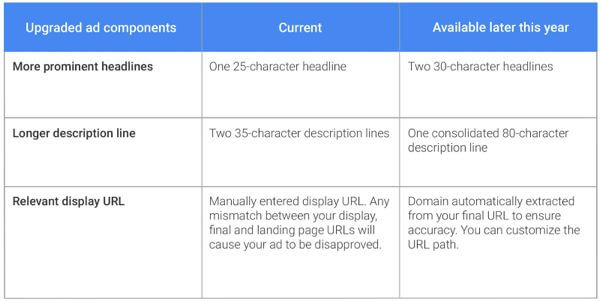
These upgrades will be especially relevant for advertisers wanting to reach the “on-the-go mobile consumer” who wants to know exactly what products and services are available before tapping into a website.
2. Responsive display ads
Consumers on mobile are now engaging with content from mobile sites, from apps and from video. But for marketers, there is an ongoing challenge to create ads to fit across all these device sizes and formats.
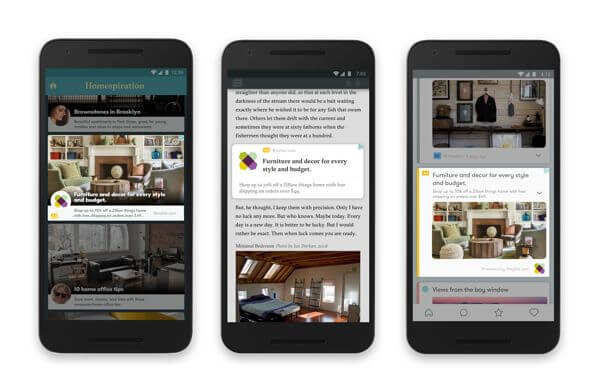
Google’s new tool – responsive ads for display – are designed to help advertisers develop ads to counter the diverse content, shapes, and sizes across the more than two million publisher sites and apps on the Google Display Network (GDN).
It’s an important move because advertisers no longer have to resize display ads depending on the site or device they showed up on. Headlines, a description, an image, and a URL will be enough for Google to now automatically design the responsive ads.
3. Bidding for a mobile
AdWords will soon allow advertisers to set individual bid adjustments for each device type (mobile, desktop and tablet). Previously, the process was more manual with each device embedded into ad campaigns through Google’s Enhanced Campaigns tool.
4. Connecting online and offline with mobile
Particularly relevant for marketers is Google’s findings that location-related mobile searches are growing 50% faster than all other mobile searches. The platform says nearly one third of all mobile searches made on Google are today related to location.
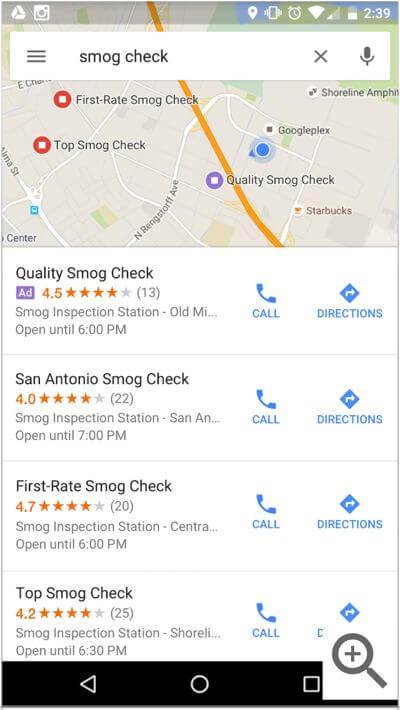
The search platform is introducing new local search ads across Google.com and Google Maps to reach consumers as they search for physical business locations.
Google Maps
New features on Google Maps will also allow businesses to develop more branded, customized experiences in two ways.
Google is experimenting with a variety of ad formats on Maps to make it easier for users to find businesses around them. For example, a Map user could see promoted pins for nearby coffee shops or gas stations along their driving route. Here’s an example of the new promoted pins:
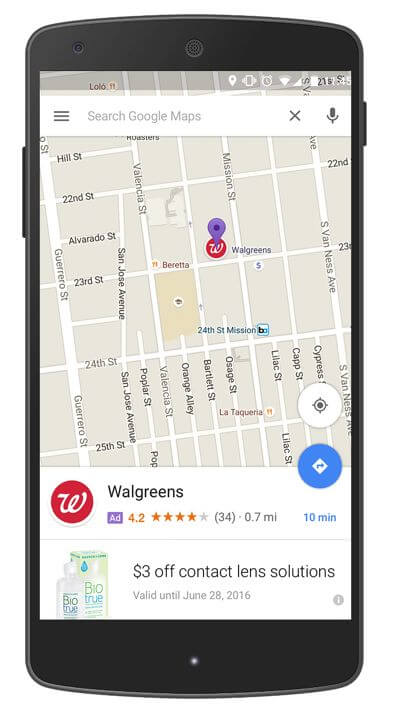
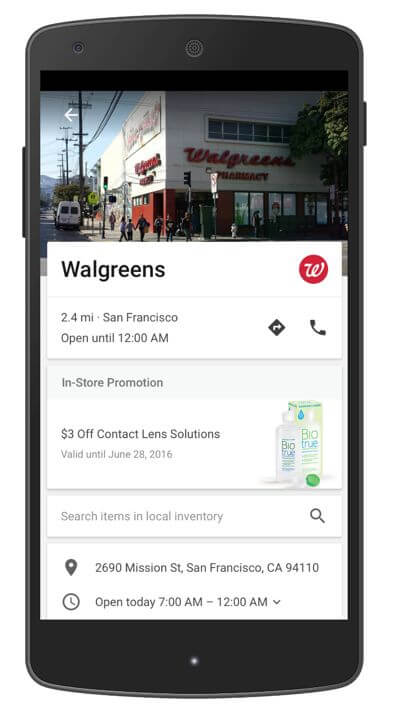
Local businesses can now include more detail about their businesses such as special offers or product offerings. Here is what the new business page will look like:
These latest offerings from Google AdWords reinforce the need for all businesses to understand the importance of mobile. Consumers have already made this shift, and businesses are now playing catch up.
*Image courtesy of Google AdWords
